
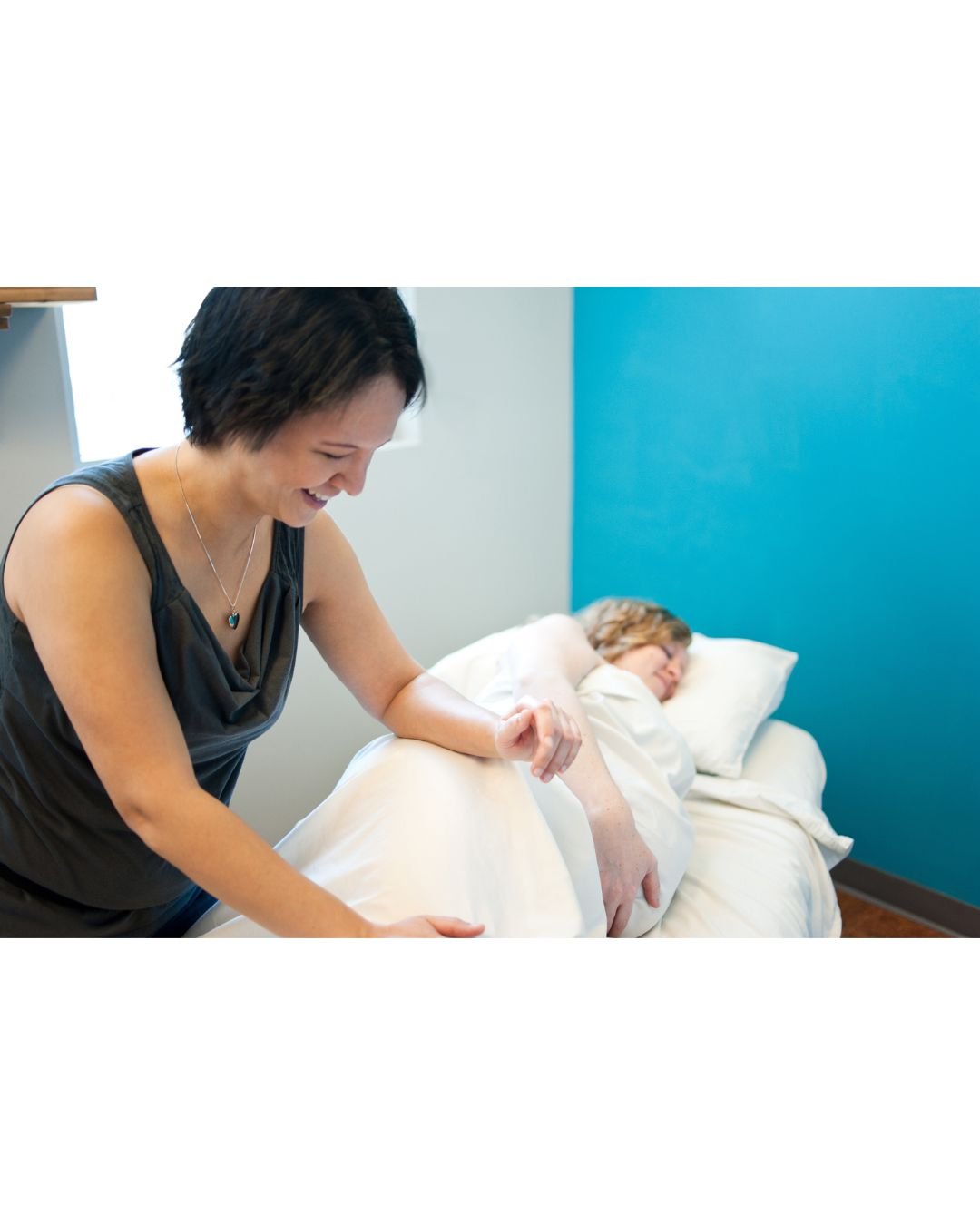
If you've had a massage client share the exciting news of their pregnancy and ask if you could continue working with them, you may have suddenly questioned your readiness to offer pregnancy massage, also known as prenatal massage.
How different is it, really?
What's safe, and when, during pregnancy?
With more than 17 years of personal and professional experience, I've collected answers to some of the most common questions massage therapists ask when beginning to work with pregnant clients.
1. When Is It Safe to Give Pregnancy Massage?
Low-risk pregnancy
First trimester
Second trimester
Third trimester
Through labor(!)
Postpartum and beyond
When your client feels ready and safe
The answer?
All of the above.
Low-Risk Pregnancy
Ask your client - before they’re on your massage table! - if they’re experiencing a high-risk pregnancy. Folks who are receiving regular prenatal care will know their risk factors, and they’ll be motivated to discuss the safety of getting massage with their care providers.
Pregnant people want to avoid endangering their pregnancy just as much as you want to avoid causing it. So, asking the right questions is key.
Are you experiencing a high-risk pregnancy?
What’s your healthcare provider’s recommendation on you receiving massage now? If you haven’t asked yet, can you check in with them and let me know?
Does your healthcare provider recommend any special precautions (or contraindications) while getting a massage now?
First Trimester
The first trimester is an excellent time for massage therapy.
Massage can help relieve stress and anxiety from the journey to getting pregnant, which is sometimes a long and difficult road. It can also provide support through the new worries that often accompany pregnancy, including questions about readiness, stability, and all the big existential questions that tend to arise during major life transitions.
Supporting someone during this stage goes beyond simply addressing physical discomfort. Listening to and normalizing the changes they may be experiencing can be incredibly valuable.
As a caring, informed professional, you can reassure clients that exhaustion, nausea, breast tenderness, and a seemingly endless appetite are all common experiences. You can also help direct them to their medical provider if something seems unusual or concerning.
This is also a wonderful opportunity to serve as part of someone's support system.
While we're not mental health therapists and it's important to stay within our scope of practice, I've collected trusted resources over the years that I regularly share with clients who are seeking additional support. Join my email list here and get a curated resource list you can share with your own clients!
Especially for someone experiencing pregnancy for the first time, entering the world of birth planning and parenthood can feel overwhelming. There is so much to learn, and the learning curve is steep.
Providing trustworthy resources can be priceless and just as valuable as the nurturing touch you provide.
(See #4 below for more about the safety of massage during the first trimester.)
Second Trimester
The second trimester is often considered the sweet spot of pregnancy.
Every experience is different, of course, but this is commonly when nausea begins to decrease, allowing pregnant people more freedom to seek massage and other supportive therapies.
This is also the time when many people begin to truly feel their body changing. As their baby grows, physical discomfort often becomes more noticeable.
Massage therapy can help relieve:
Back pain
Hip pain
General tension
Stress and anxiety
Difficulty finding comfortable positions
Massage can also provide emotional support during a season of constant change.
Third Trimester
The third trimester is a time of tremendous growth.
The body is holding more fluid, baby is getting bigger every day, and space inside the body becomes increasingly limited. My own babies seemed particularly fond of resting their feet on my ribs and leaning heavily on my bladder.
Massage therapy during the third trimester can help clients feel comfortable in their bodies again when that can be increasingly difficult to achieve on their own.
Caring, informed touch helps settle the nervous system, reduce stress, and improve overall wellness. In fact, decreasing stress during pregnancy can even contribute to better birth outcomes.
Massage During Labor
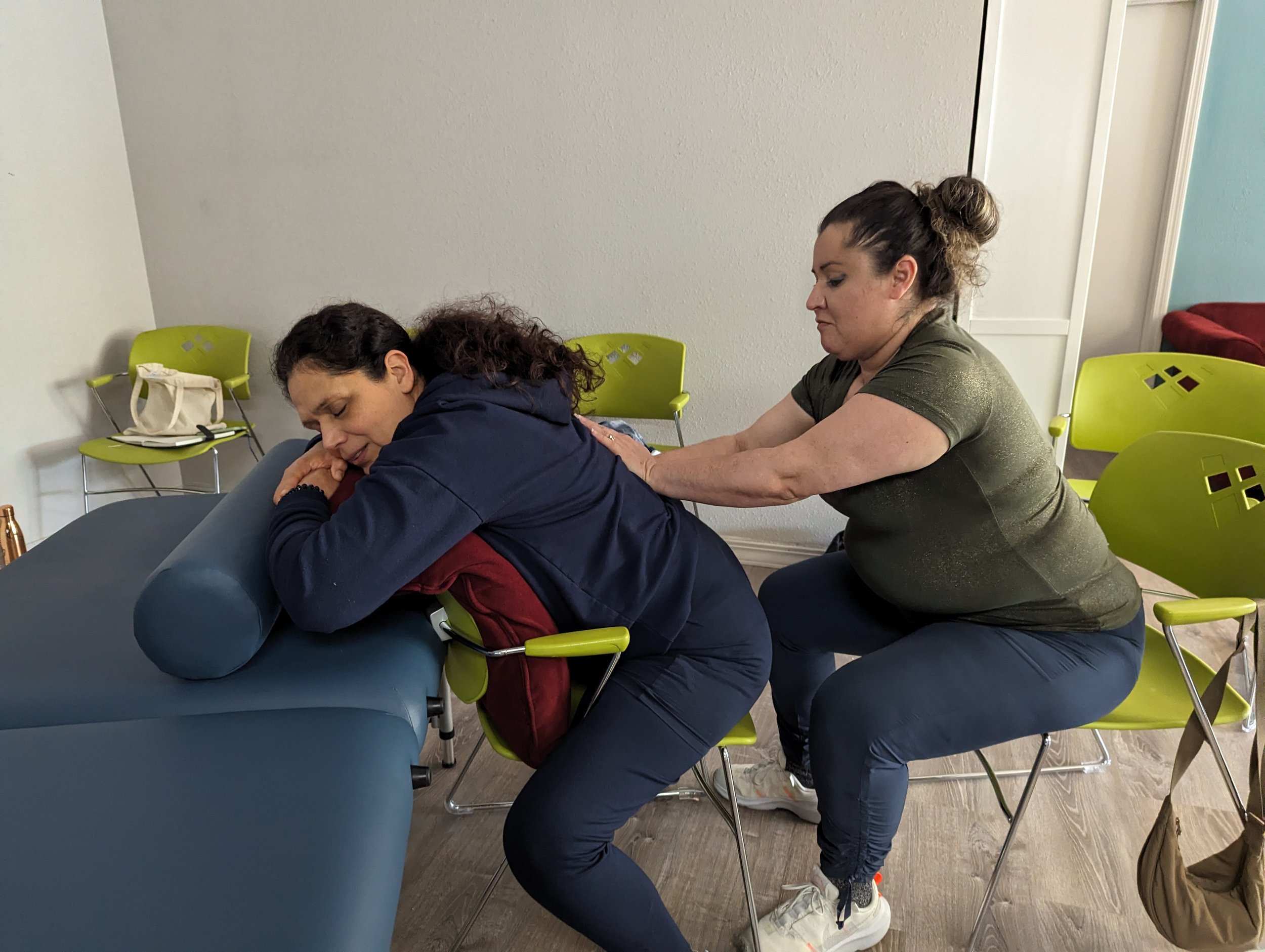
I teach labor doulas - dedicated professionals who support families throughout the birthing process - to use their hands to provide comfort measures during childbirth. They are by the family’s side during this process, which can range from hours to days, and having some massage skills to offer can be a powerful tool for nervous system support. There's no reason massage therapists couldn't provide hands-on support during labor, if that's where your interests lie.
Our culture often showers pregnant people with attention, so much so that prenatal massage is frequently someone's first experience receiving professional bodywork.
But this article wouldn't be complete without mentioning postpartum massage.
Postpartum Massage Matters, Too
Postpartum massage is an incredibly valuable service, and it doesn't get nearly enough attention.
After giving birth, it's common for all attention to shift to the baby.
How is the baby?
Is the baby sleeping?
Is the baby feeding well?
When I had my own children, I was surprised by how quickly I felt invisible as the birthing person. I experienced a sudden shift from being me - a unique individual - to being Mom, whose needs were overridden by those of the baby.
Postpartum massage offers a different perspective. It centers the needs of the person who just experienced one of the biggest transformations of their life, and reminds them that they are still worthy of care and nurturing as a person. Postpartum massage can bring added compassion, healing, and support to new parents as they relearn how to make time for themselves.
The timing of postpartum massage varies. Recovery after a vaginal birth looks very different from recovery after a C-section, which is a major abdominal surgery. I always recommend that clients check with their medical provider before returning to massage after birth.
Postpartum massage can focus on:
Aching neck and shoulders
Forearms tired from holding a baby for hours
Encouraging deep rest during an exhausting season
Supporting bodily autonomy
Normalizing the emotional and identity changes that often accompany parenthood
As caring professionals, we have the opportunity to nurture the whole person through one of life's biggest transitions.
2. Where Can and Can't I Massage on a Pregnant Person's Body?
The pregnant body experiences so many changes throughout pregnancy, and massage is an amazing way to offer comfort, relieve tension, and support overall wellness during this time.
Pretty much any massage feels good when it's provided with trust, care, and consent. However, there are a few areas that deserve extra awareness and caution when working with pregnant clients.
Acupressure Points
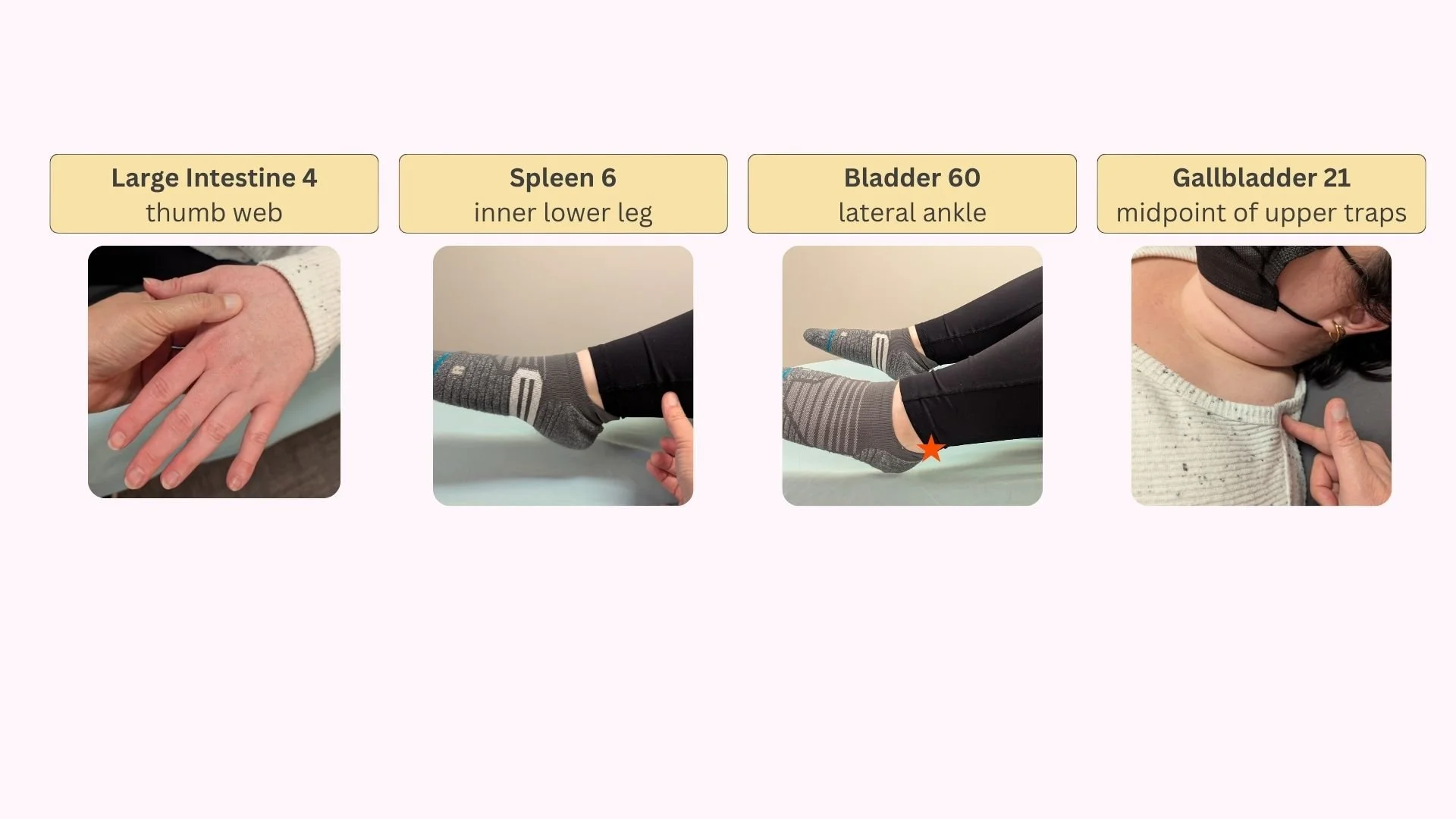
Traditional Eastern medicine identifies four acupressure points that are thought to stimulate contractions:
Large Intestine 4 (in the thumb web)
Spleen 6 (inner lower leg, four finger-widths above the medial malleolus)
Bladder 60 (behind the lateral ankle)
Gallbladder 21 (midpoint of the upper trapezius)
During pregnancy, I recommend avoiding prolonged, direct pressure on these points.
Once baby is born, however, these areas are fair game again.
Lower Legs
Throughout pregnancy and the first few months postpartum, people have so much additional blood in their bodies and are at a higher risk for blood clotting. These are natural adaptations that help prepare the body for childbirth, but it is something we should remain aware of when working with pregnant and postpartum clients.
With gravity at play, pregnant people often experience slowed circulation and edema in the lower legs. This is normal, but creates a higher susceptibility to blood clotting.
To avoid the possibility of dislodging potential blood clots, I recommend avoiding deep pressure in the lower legs. Play it safe and stick with light effleurage at the lower legs.
Belly Massage
Unless you have specialized training in abdominal work for pregnant people, it's best to leave belly massage out of prenatal sessions.
Believe me, your pregnant clients want you to stick with what you know how to do well.
Client Preference
In addition to these areas of caution, let your client be your guide. Empower them to let you know what they want and don’t want. Keep in mind that their experience continually changes throughout their pregnancy, and in postpartum too, and their needs will naturally shift over time. It’s our responsibility to communicate with clients each time to find out where we should work and where to avoid.
3. What Special Equipment Do I Need?
One of the best things about prenatal massage is that you don't need a room full of special equipment to get started.
Three standard pillows and a leg bolster are usually enough. Yup, that’s it!
(See #5 below for how to use these simple supplies to position your client for safety and comfort!)
Housecall Massages and Traveling Lightly
Amazingly, for a housecall massage, you can get by with just bringing your mobile massage table with its face cradle and bolster.
This simple setup (see #5 for how to use them) allows you to travel lightly while still providing plenty of support to an in-home client.
4. Why Have I Heard That Pregnancy Massage Should Be Avoided During the First Trimester?
There is so much fear and uncertainty surrounding prenatal massage in our culture.
I experienced this firsthand when I became pregnant during massage school: suddenly, nobody wanted to risk touching me.
Pregnant people need bodywork just as much as everyone else, and there is nothing inherently dangerous about receiving massage during the first trimester.
Why Miscarriage Statistics Create Fear
The first trimester is simply the most common time for miscarriages to occur.
This is one reason many people wait until the second trimester to announce their pregnancy.
What sometimes scares massage therapists is the possibility of being associated with anything that might go wrong during this naturally vulnerable stage.
While those fears are understandable, they can create unnecessary anxiety around serving pregnant clients, and keep pregnant people from receiving the nurturing care they need.
Okay, but, how do you convince a client that massage is safe during their first trimester?
I have a two-part answer to this.
Part One: You Don't
Your client needs to feel completely ready and safe before receiving massage.
As an LMT, you are a care provider: offering the hands-on nurturing that clients seek.
You are an educator: sharing evidence-based information to support informed decisions.
You may even be a marketer and salesperson: shouting the benefits of massage from the rooftops.
But convincing someone that prenatal massage is safe for them is where a sales pitch goes too far. That’s where the ethics of client choice and client consent come in, and persuading clients to do anything is not what massage therapists do. No thank you.
We never pressure anyone into receiving massage before they're completely on board. It’s no different with pregnant people.
If someone is unsure about the timing of prenatal massage, I encourage them to talk to the people they know and trust:
Their healthcare provider
A well-informed midwife or doula
Their partner
Their mom
Anyone whose opinion helps them feel safe and supported
They can gather the information they need and come back to you when they're ready.
Massage therapy is amazing and worth waiting for, and they’ll be back when they feel ready for it!
Part Two: Your Confidence Matters
As the massage therapist, you need to feel confident in the safety of what you're doing.
Your confidence in your work, and your ability to communicate that confidence, are absolutely critical.
Because, as a loving reminder: your feelings are translated through your hands.
Whether you're nervous about harming the baby, unsure about positioning, or worried about being asked questions you can't answer, your clients will feel that energy.
Massage therapy during the first trimester can be wonderful, safe, and deeply supportive.
But before you can offer that experience to someone else, it's important to build your own confidence so that you can communicate it through your words, your body language, and your touch.
Building Confidence as a Prenatal Massage Therapist
If you're new to prenatal massage, it's perfectly okay to build your confidence gradually.
You don't need to rush.
You might start by:
Working only with clients in their second trimester
Practicing with pregnant friends or people you know well
Taking continuing education classes
Learning from experienced prenatal massage therapists
Everyone develops confidence at their own pace.
And I’m here to support you in this process.
By the way, here’s a link to the on-demand class I created just for you!
5. How Do I Safely Position a Pregnant Client?
There are lots of ways to position pregnant clients on the massage table.
Ultimately, the best position is the one your client feels comfortable with on that particular day.
Clear communication is always the most important tool in your toolkit.
Here are two of my clients’ favorite options that you can offer. Most of the time, one of these two will achieve the safety, comfort, and access needed for a fabulous prenatal massage session.
(These photos are from my hands-on perinatal massage CE class. Thank you, students!)
Semi-Reclined Position
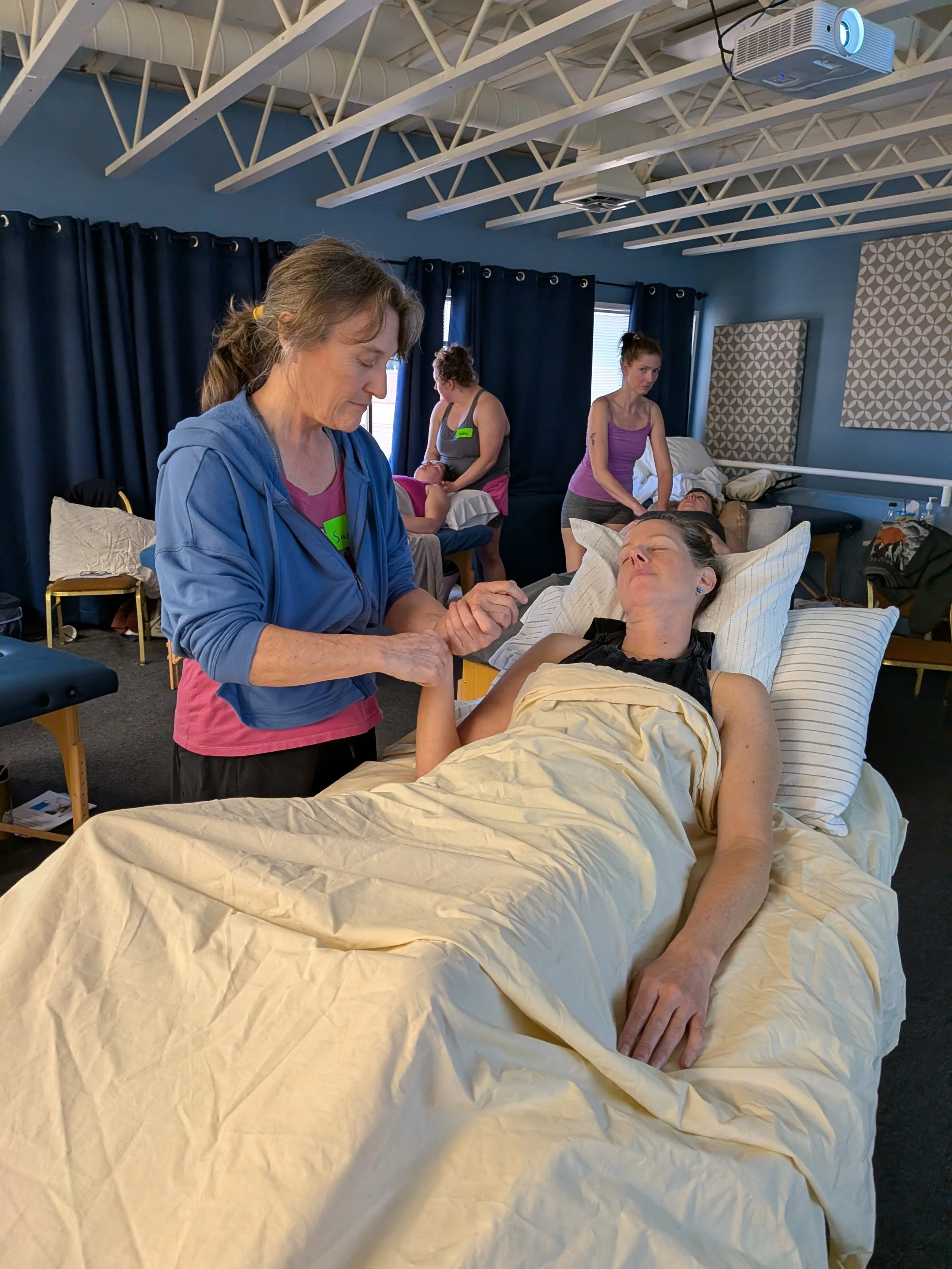
Having clients lie on their back at an incline with your three standard pillows stacked behind them and a bolster beneath their knees is comfortable for many pregnant people.
This position provides access to:
Head
Neck
Shoulders
Arms
Legs
For clients in their second and third trimesters, lying completely flat on their back can allow the weight of the growing uterus to put pressure on the inferior vena cava, a major vein near the spine responsible for bringing blood from the lower body back up to the heart.
Elevating your client even just 15-30 degrees with pillows helps avoid this issue.
You can also place a pillow beneath the client's right hip to reduce pressure in the area.
Sidelying Position
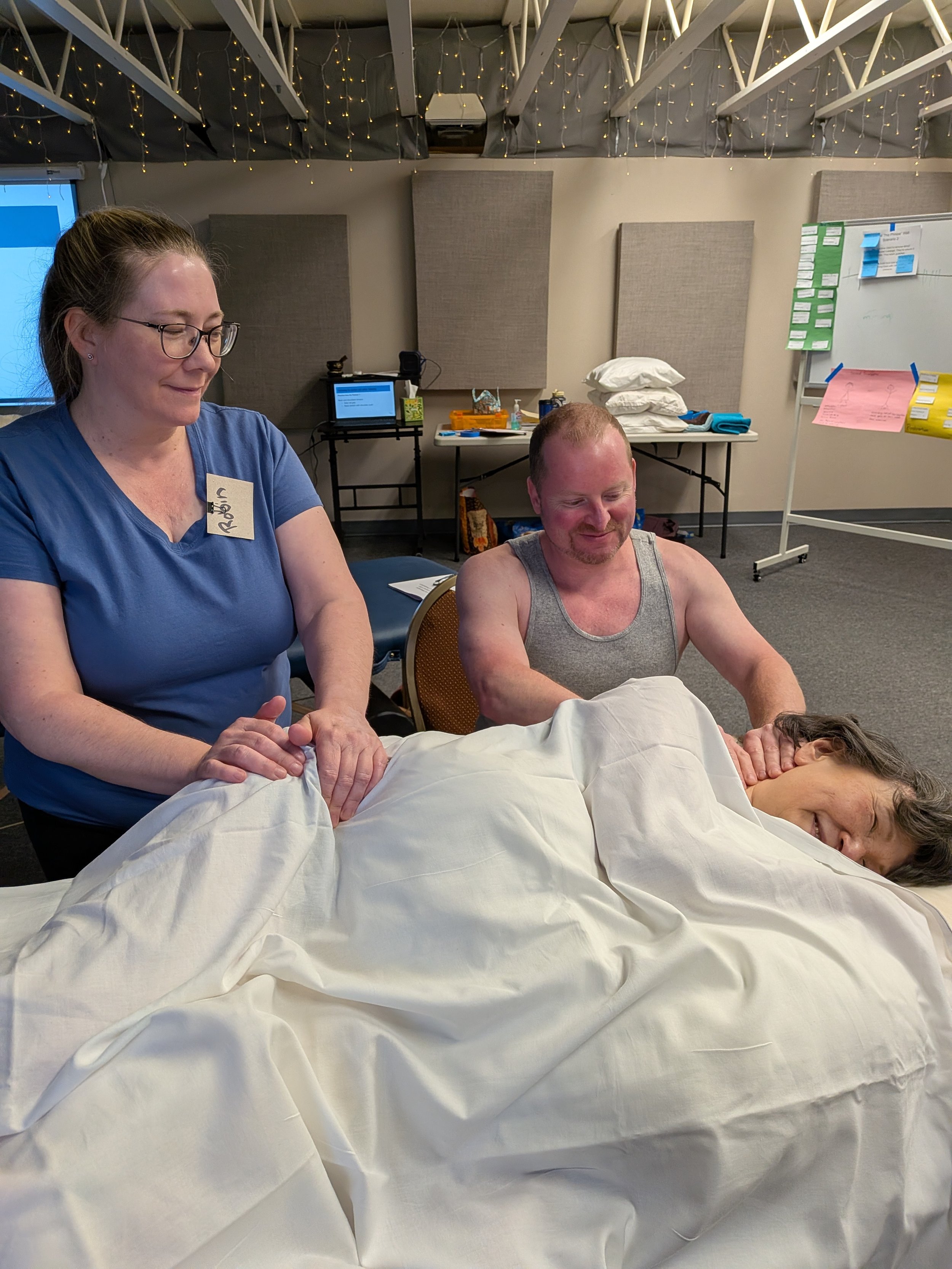
Sidelying is how many pregnant people spend their sleeping hours, making it one of the most familiar and comfortable positions in prenatal massages.
Proper bolstering is essential.
(See #3 above for the equipment you’ll want on hand.)
To create a safe and comfortable sidelying setup:
Place one standard pillow under the client’s head to support a neutral neck position;
Place one pillow in front of their torso for them to hug, so that when you’re massaging their back, you don't roll them forward. This is also helpful in keeping their shoulders square during the session; and
Place one standard pillow between their knees and lower legs, so the client’s hips are square. Their top leg should be parallel to the surface of the massage table to have as little strain as possible on the hips. If your pillows vary, ensure that you use a knee pillow that is firm and thick enough to keep their lower body positioned well.
Sidelying is my favorite position for accessing commonly achy hips and backs.
It also offers easy access for a full-body massage. For example, when the client's left side is against the table, like in the photo above, you have access to the entire right side of their body. Once they roll over, you gain access to the entire left side.
Sidelying At Home
In a housecall massage, to minimize the number of pillows you need to haul across town, you can position your regular face cradle cushion under your client's head. For the hips, you’ll have your client straighten their bottom leg, and you’ll lay the bolster, parallel to the side of the table, beneath their top knee and lower leg.
And don't be afraid to borrow a pillow from around the house if your client is okay with that. Their comfort is so important!
Let Your Client Guide You
Pregnancy changes quickly.
It often feels like the person who arrives for massage today has a totally different body than when they were on your table a few weeks ago.
The best way to determine client positioning is to ask.
Before every session, I like to ask:
How have you been comfortable lying down lately?
In what position have you been sleeping?
What areas need the most attention today?
Those answers give you current information and allow you to tailor each session to your client's changing needs.
Ready to Learn More?
If you're interested in building confidence working with pregnant and postpartum clients, I'd love to support you through continuing education classes and resources.
